At Critical Factors we are obsessed with sustainable performance with everything we do. This requires a set of key principles that underpin the Strategy and Business Planning Process.
Our first foundational principle is the 3 horizons methodology. First pioneered by Baghai, Coley White in 1999 is the simplest and clearest way to describe a key foundation of success. We have to focus on all 3 horizons of business development concurrently to successfully grow and scale a business or run any large organisation successfully.
A key part of this is the need for a set of key guiding organisational principles and values as the starting point of the Strategy process.
Foundation Principle number 2.
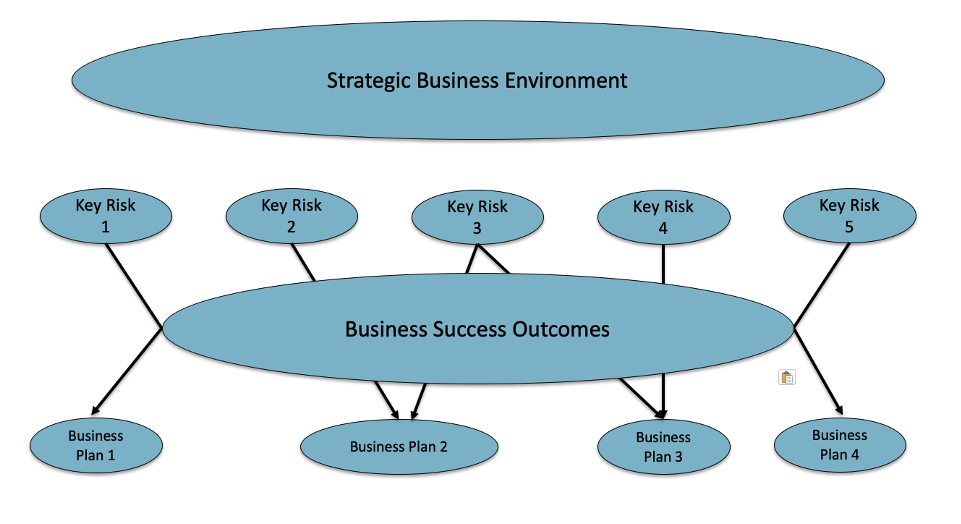
Take a Risk Based Approach
At the end of the day business is about taking risks. that is how we make money, or how a Government Department moves forward in fulfilling its obligation to the community in a Cost Conscious manner. If we don’t take risks then we do not move forward.
Any Strategic Plan has to be centred on identifying, quantifying and qualifying that risk before detailing an organisational response to that risk.
This does not mean that we don’t think big, employ blue sky thinking etc in our Strategy sessions but they must be linked back in a tangible manner to the key risks facing an organisation.
Foundation Principle number 3.
Strategy Implementation is about change
An organisation that does not change will not develop and grow. The world we all do business in is changing at a faster and faster pace and we MUST change with it to survive and grow.
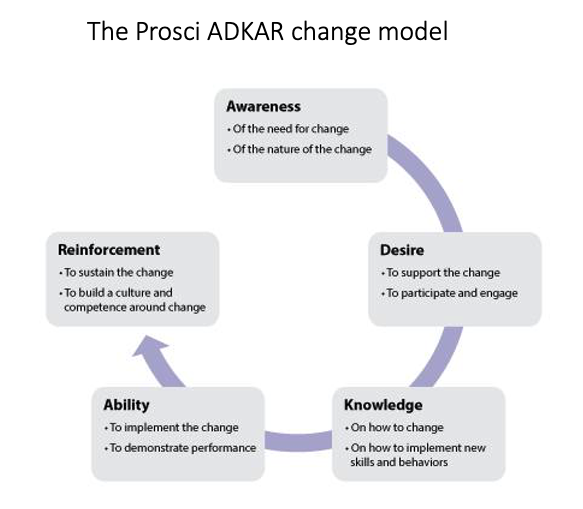
Conversely many of our people are averse to change. In fact more than 50% of the working population have a hard wired resistance to change. this creates one of the key challenges of Strategic Plan Implementation.
We use and recommend the Prosci Change Model. It is by far the simplest and most successful model for implementing change that we have ever seen. Our track record of working with organisations to deliver on Strategic Plans is 44% more successful when that organisation adopts the Prosaic methodology to parallel their plan implementation programs.
Contact us about Strategic and Business Planning.
we use a range of Planning techniques & methodologies?
We use a range of strategic planning tools and methodologies depending on the organisation we are working with.
The reality is that until we have engaged with a organisation it is invalid to nominate the right methodology to use.
Every organisation has its own culture and requirements, and these are critical in the choice of the right Strategic Planning and Execution Model. In our experience pre-empting this choice during the proposal phase creates its own execution risk for organisations.
Appropriate Planning, Goals and Measurements.
Scaling and growing a business requires innovation and sustainability, otherwise you are very likely to ‘grow broke’. Clear plans, metrics and measurements for success are critical components in any growth plan.
What we measure drives behaviours and outcomes and as such requires very careful consideration. Measure the wrong things and as a result drive behaviours that you want to see more of rather than the unintended consequences of an unplanned, inappropriately measured business. revenue is not a measure of sustainability
What are Some our most common approaches?
The OKR Framework
The strategic planning model of choice for Google, Intel, Spotify, X and LinkedIn amongst others. The OKR framework is one of the more straightforward strategic planning tools. It is designed to create alignment and engagement around measurable goals by clearly defining both objectives and key results.
This model is effective, in part, because of its simplicity; it also employs a “reverse” hierarchy that works to gain buy-in and alignment from the ground up.
The Balanced Scorecard
The Balanced Scorecard is a strategy management framework that is in use in many Australian Corporates and often used for individual performance management plans as well. It takes into account a combination of your:
Objectives, which are high-level organizational goals.
Measures, which help you understand if you’re accomplishing your objective strategically.
Initiatives, which are key action programs that help you achieve your objectives.
This approach can be very effective but often leads to a dilution of accountability for individuals within an organisation.
Blue Ocean Strategy
The idea behind Blue Ocean Strategy is for organisations to develop in “uncontested market space” (e.g. a blue ocean) instead of a market space that is either developed or saturated (e.g. a red ocean). If your organization is able to create a blue ocean, it can mean a massive value boost for your company, its buyers, and its employees.
Our view is that a combination of elements of all of these methodologies is usually the best approach.
'Strategy consulting and implementation support that works and stays real with a pragmatic approach that ensures that we never bit off more than we could chew at any given time.'
'A clear and uncomplicated approach that ensures that we managing the competing priorities in our business. The need to remain solvent with the burning desire to grow. Combined with the Scaling Up methodology these guys were dynamite.'
'This is how you do it! A clear and uncomplicated approach based on data and experience that meant that we stayed on track and never went into the world of fantasy. For the first time in 20 years I truly believe that we WILL deliver on what we have planned too over the coming 3 years.'